Monday, 21 September 2020

Do dental implant treatments hurt?

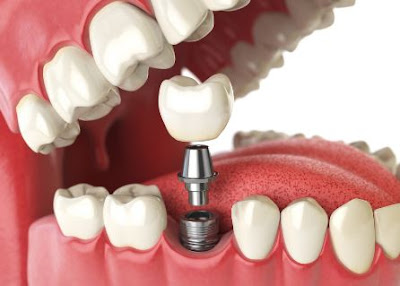
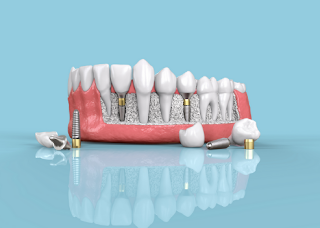
Dental implants are surgical procedures where the roots of teeth are replaced with metal, usually Titanium, screw-like posts, and then the damaged or missing teeth are replaced with artificial ones, placed and secured on top of these posts.


But, are they painful?

For most patients, it is no more than what occurs during tooth extraction, often less. Whatever pain there is, will generally be treated with a local anaesthetic. 

Often, it is the steps that may have to be taken before that cause the most discomfort. There may be times when the bone volume may have to be increased with bone grafting; a sinus lift may have to be done to move the sinus membrane upward to make room for the bone, or teeth may have to be removed. Or, none of this may be necessary, and it may be quite straightforward.

Grafting is done under local anaesthesia and afterwards, ordinary pain and anti-inflammatory medication is all that would be necessary. Sinus lifting, however, takes longer and is done under sedation. There may be a dull ache in the upper jaw bone, the face and in the nose, and pain medication, antibiotics, anti-congestion and anti-inflammatory medication may be prescribed.

The actual implant surgery is done under local anaesthetic and would cause very little or no discomfort at all. There may be mild pain 2-4 hours later and the gums may ache too. The patient may have to wear a healing cap to promote soft and hard tissue healing around the implant, and in some, it may cause irritation.

An implant is an invasive procedure and pain and soreness is the body’s natural response and it usually does not last more than 3 days. And, all being well, there should be no pain after 2 weeks.


Aftercare is important and there are some things a patient can do in general like: go to a trained, experienced dentist; not exercising; if already on some medication, inform the dentist of it; take prescribed medication properly; keep your mouth clean by brushing and using non-alcoholic mouthwash; eat soft food rich in nutrients to help speed up healing; absolutely avoid tobacco and alcohol and last but not the least, get lots of sleep, at least 8 hours every night.


Blog reviewed By: Dr. Sudhakara Reddy
Mail us: drsudhakarareddy@gmail.com

Tuesday, 7 July 2020

Do dental implants require maintenance?

A dental implant is a surgical component, usually made of titanium, that connects the bone of the jaw with the artificial teeth or crown that replaces the lost natural teeth. 


The dental implants are of 3 parts; the titanium implant, the artificial teeth that go on top of the implant and natural jaw bone into which both are implanted. 

Titanium is one of the strongest and durable materials known to humans and would require the least or no maintenance at all. It is the other two and surrounding areas that could require regular maintenance. This can be:

Professional Maintenance:

The professional checkup should be done periodically (once in 6 months) to prevent a buildup of plaque and/or infection-causing bacteria in and around the threads of the implant and the surrounding gum tissue. If required, regular scaling for natural teeth and special method cleaning with plastic scaler tips/special scaler tips for implant area using sonic or ultrasonic techniques, the dentist cleans the surface of the teeth and the gumline. Alignment and implant condition is also checked. 

Personnel / @Home Maintenance:

Treat your implants as you would your natural teeth. Brush, floss and use a non-alcoholic mouthwash regularly. 

Brushing: 
Manual, sonic or electric brushes? Though sonic or electric brushes are more consistent in their action, it does not matter what you choose. What is important is how it feels to use, how easy it is to use and it must be soft bristled. And, you must brush daily without fail.

Flossing:
This is a physical process where a thin thread is used to remove food and plaque from between teeth in places where brushes cannot reach. This is not something that is popular in India.

Water Flossing / Oral Irrigation and Mouthwash: 
Here pulses of high-pressure water are used to remove plaque and food particles. Followed by a rinse of antimicrobial nonalcoholic mouthwash. 

Implant Care and Maintenance:

Improper cleaning and maintenance can cause bleeding around the implant leading to infection, bone loss, requiring removal of the implant and even bone graft. Immediately after the procedure, do exactly as the dentist instructs. Brush, floss, rinse should become second nature. Change your diet to include non-acidic, softer food and nutrient-rich drinks. Schedule dental checkups every six months or less.


So, Yes! The implants do require care and maintenance. Maybe, just a little more than your normal teeth.

Blog reviewed By: Dr. Sudhakara Reddy
Mail us: drsudhakarareddy@gmail.com

Wednesday, 20 May 2020

Can dental implants happen twice? Or, more accurately, will dental implants have to be repeated

A dental implant is a surgical component, a replacement root for teeth, usually made of titanium, which connects the bone of the skull or jaw, to the prosthesis that the patient may require. They are in the form of a screw with either a rough or smooth surface. Though titanium is most common, ceramic implants are also available.

 Dental Implant

While dental implants, in general, have very high success rates, there are cases where they may have to be replaced. Failures also happen usually in the first year after implant.

Following are some common possibilities:
  1. Loosened Dental Crown: Crown is a cap or cover put over a tooth that is damaged or weakened. This is not serious, but the crown may have to be tightened or replaced.
  2. Bone Loss: Poor bone quality or quantity could lead to failure of osseointegration, the direct interface between the implant and bone, further leading to implant failure.
  3. Overheating, contamination, and trauma during surgery is another cause.
  4. Bacterial infection: these affect the implants just as much as the normal teeth. So, when any other cause pushes the implant into the failure path, these bacteria worsen the situation by causing infection in the area.
  5. Failure of Angiogenesis: the formation of new blood vessels is called angiogenesis. As the implant and its surface are non-organic, the supply of blood to these areas is problematic. Hence, when insufficient new blood vessels form, the likelihood of implant failure increases.
  6. When an implant causes clinical symptoms like severe and recurring pain, facial mobility, it may be considered defective and may have to be replaced or reimplanted.
 Dental Implant

Here, it must be noted that, relative to initial implants, replacement implants have a smaller success rate. Above all that, the patient may have to go through additional hard and soft tissue graft; teeth crowns may need a replacement; longer time to heal and last but not the least, more financial costs.


Blog reviewed By: Dr. Sudhakara Reddy
Mail us: drsudhakarareddy@gmail.com

Wednesday, 19 February 2020

Digital Smile Design: Technology in Dentistry

Do you know the simple act of smiling can help you to experience the actual happiness, joy, or amusement? Smiling on purpose changes brain chemistry, and it is a great help to people who are dealing with depression and anxiety.


However, having unattractive, crooked, yellowish, or missing teeth can pull you back from delivering a beautiful smile. At some point in life, you might wish for a beautiful smile like others. Here is some happy news for you. Smile design can make your dream of having a flawless and confident smile, true.

What is a smile design?

A digital smile design is a technology used for managing the shapes, contours, and color of the teeth. This helps to correct your teeth and facial composition and improves your appearance and smile. The process of smile design includes the evaluation and analysis of both facial and dental composition. This can help the expert to straighten the misaligned teeth, closing gaps, repairing the chipped or cracked teeth changing the shape of the teeth, and whitening your teeth. By including your facial aesthetics and other important aspects, the expert will create a more realistic model of your dental and facial composition, that you can expect from the treatment.

Experts of Dental Implant Studio, with the help of most advanced technology, can design the perfect smile you wish.

Digital Smile Design Technology

Intraoral scanner with CAD/CAM

Dental Implant Studio uses an intraoral scanner to get the perfect digital impressions of your dental and facial composition. This is a high definition 3D scanning device, which can give 3 Dimensional models of a patient's teeth. These digital impressions are then sent to the CAD/CAM to manufacture dental devices more precisely. CAD/CAM is a specially designed device and application for designing and manufacturing custom made dental crowns or specific zirconium-based esthetic crowns/veneers or a patient-specific dental device, with the help of an Intraoral scanner or computer.  

This procedure is a time-saver, as the overall process takes only a few minutes, and the patient could receive the prosthetic within a day.


If you are concerned about your smile and are in search of a perfect place to depend on, happy news, Your search is over. Book an appointment at Dental Implant Studio and get your beautiful smile back.

Blog reviewed By: Dr. Sudhakara Reddy
Mail us: drsudhakarareddy@gmail.com

Thursday, 12 December 2019

Win back your smile with dental implants

Missing teeth can affect a smile and would bring an older look on the face. Dental implants help to replace the missing teeth and bring back the smile and better dental appearance.

 Dental Implant

Dental implants are made of metal alloy that is titanium, which is compatible with the body tissues. Implants get bonded with the surrounding and adjacent bones quickly and act as a new root, which was lost. Dental implants functions and looks just like a natural tooth.

Prevent facial collapse 

Dental implants can improve oral health by resolving a lot of issues with tooth loss. While losing teeth, there are chances for jaw deterioration and facial collapse. The shape of the face changes and would bring an older look. Doctors would recommend dental implants to rectify these issues and helps to improve oral health and dental appearance.

Protects the remaining teeth 

Aging, injuries, or illness can lead to loss of teeth. An immediate replacement can help improve these issues. Usually, doctors would recommend a dental implant as it will not affect the adjacent teeth. Implants will make a person look younger as it helps to fill the gaps and prevents further tooth loss. The structure of the bone, which is present below the tooth, is well-maintained; hence, no harm is caused to the remaining teeth.

Smile again with confidence 

Confidence and optimism are always proven with a beautiful smile. The teeth support the position of the lips, and missing teeth can make a huge difference. Loss of teeth can bring out an aged look, but doctors could help restore the smile and get back the youthful look with appropriate dental implants.

Chew 

Missing teeth can lead to problems with proper digestion, and it would lead to health issues. The full set of teeth helps to evenly distribute the biting force, which helps to improve better digestion. The natural process of bone renewal is stimulated with the structure of the bone under the tooth being well-maintained.

Longevity 

Dentists choose dental implants for missing tooth as it has better longevity. Dentures and bridges would require repair or replacement in the long run, whereas dental implants will last life -long if maintained well.

 Dental Implant

Dental implants can help get back the youthful smile. However, it requires regular maintenance and hygiene to remain the same in the long-run.

Blog reviewed By: Dr. Sudhakara Reddy
Mail us: drsudhakarareddy@gmail.com

Wednesday, 6 November 2019

The beauty of immediate implants

Immediate implantation is a technique where the dental implants are placed and restored with a crown within 24-48 hours of tooth extraction. The immediate implants can increase patient satisfaction and treatment acceptance. People usually prefer immediate implants for better self-esteem and aesthetic preservation. Traditional implants will take more time. Hence the demand for immediate implants has seen a rise.


Benefits of immediate implants

There are a few advantages of getting an immediate implant, such as:
  • Less time for treatment
  • Patients acceptability
  • Better self-esteem
  • Natural-looking
  • Can be placed in the same position of the extracted teeth
  • Minimizes the need for angled abutments
  • Works likes a regular teeth
  • Less time for healing
  • Prevents bone loss
  • Helps to preserve the morphology of the peri-implant of the soft tissues

Candidates for immediate implants

Immediate Implants can be performed for the following conditions:
  • Teeth missing in front or back
  • Decayed teeth that cannot be rectified with any other treatments
  • Missing teeth due to prior removal
  • Difficulty in chewing due to other dental issues
  • Uncomfortable dentures
  • Gaps in the front teeth
  • Infected gums which could lead to loss of that tooth
  • For a better smile
  • For a better dental appearance
  • Eliminates further surgeries
 Procedure

For a long term success rate in immediate implants, the doctors would require an appropriate diagnosis and treatment plan. There could be specific indications to obtain immediate implants, such as to attain primary stability with the right implant in an ideal therapeutic manner. Soft tissue, the quality, and quantity of the bone, the presence of pathology, and the condition of the adjacent teeth need to be taken into consideration while planning for an immediate implant.

Immediate implants will keep certain aspects during the procedure so that unnecessary mistakes can be avoided. The elements would include the presence of a buccal plate, primary stability, implant design, filling the gap between the buccal plate and the implant and the tissue biotype.

The doctor would initially rinse the patient’s mouth with a solution, and local anesthesia will be administered. When a particular area is numb, the damaged tooth will be extracted. The damaged or broken teeth would be carefully removed from the socket so that the other area around the bone would not get damaged. The implant is placed for primary stability to the root of the tooth. With the help of an abutment, the dentist will place a crown, which becomes the new tooth.
Implant

Immediate implants are considered to be a viable and predictable solution for missing teeth. This minimally invasive surgical technique helps to preserve the gingival aesthetics, which is a boon to the patient in the long run.

Contact Us

Blog reviewed By: Dr. Sudhakara Reddy
Mail us: drsudhakarareddy@gmail.com

Friday, 16 August 2019

Do Teeth Replaced Using Implants Without Waiting Period Last Long

The implant technology revolutionized the field of dentistry. Previous protocol followed to place dental implant spanned for a period of 5-6 months until the final crown was placed. However, the recent technological advancements have provided patients with an option known as –Immediate load dental implants which reduces the waiting time of placing the implant and restoring it with a crown to a period of just 3-4 days.

The eligibility criteria for patients to opt for immediate implants are same as traditional implants and include good oral health, sufficient bone support and lack of tobacco use along with a thorough and complete examination from the dental specialist to determine their viability for the procedure.

immediate dental in bangalore

PROS OF IMMEDIATE IMPLANTS


1.      Instant results with less waiting and surgical time

2.      Provides natural look and feel

3.      Improved patient satisfaction

4.      No invasive surgery required

5.      Less discomfort and pain

6.      Restores facial counter

7.      Teeth are fixed to the jaw which eliminates any kind of slippage

8.      Provides lasting results with reduced dental visits

PROCEDURE FOR IMMEDIATE IMPLANTS


The key to the procedure is making use of imaging technology which helps the dentist to take 3D images of the mouth prior to the procedure. This step helps him in meticulous planning of the implant placement. The procedure involves a minimally invasive surgery also known as keyhole surgery with which the implants are placed directly into the jawbone under local anesthesia with minimal discomfort. Moreover, when the crown is placed on the implant with less waiting time it allows the gum to grow around it making it look like natural teeth.

LONGEVITY OF IMMEDIATE IMPLANTS


Immediate dental implants have almost the same success rate as the traditional ones and primary stability is an important factor that determines success. Immediate implants have the same life span as their counterparts as long as proper care is taken. The longevity is influenced by the below-mentioned factors.

1.      Maintaining good oral hygiene – daily brushing and flossing

2.      Avoid chewing hard items and opening things with teeth

3.       Scheduling on time dentist appointments


The longevity and success rate of the implants also depend on how skillful your dentist is in placing your implant. For an expert opinion on implants visit Dr. Sudhakar Reddy’s Dental implant studio, the dental clinic which is popular for its advanced and reliable treatments.


Blog reviewed By: Dr. Sudhakara Reddy
Mail us: drsudhakarareddy@gmail.com